
Nvidia Shifts to AI at CES 2026, No New GPUs Announced
WASHINGTON, D.C. — Nvidia opened CES 2026 with a decisive shift toward artificial intelligence, unveiling its new Vera Rubin architecture during a high‑profile keynote in Las Vegas that immediately reset expectations for the company’s year ahead. CEO Jensen Huang introduced the platform on Monday and confirmed that the company would not release any new GeForce GPUs at the show. The announcement ended a five‑year streak of CES graphics card debuts. It underscored how aggressively the company is reorganizing around AI as global demand for advanced computing continues to surge.
Huang described Vera Rubin as a major step forward in AI infrastructure, built to support the rapid expansion of model size, context length and real‑time reasoning. Nvidia said the platform is already in full production and will expand throughout the year as cloud providers prepare to integrate the architecture into next‑generation data centers. The company positioned Rubin as the successor to Blackwell and the foundation for systems designed to run nonstop, industrial‑scale intelligence generation.
Vera Rubin Takes the Spotlight as Nvidia Repositions for an AI‑Driven Future
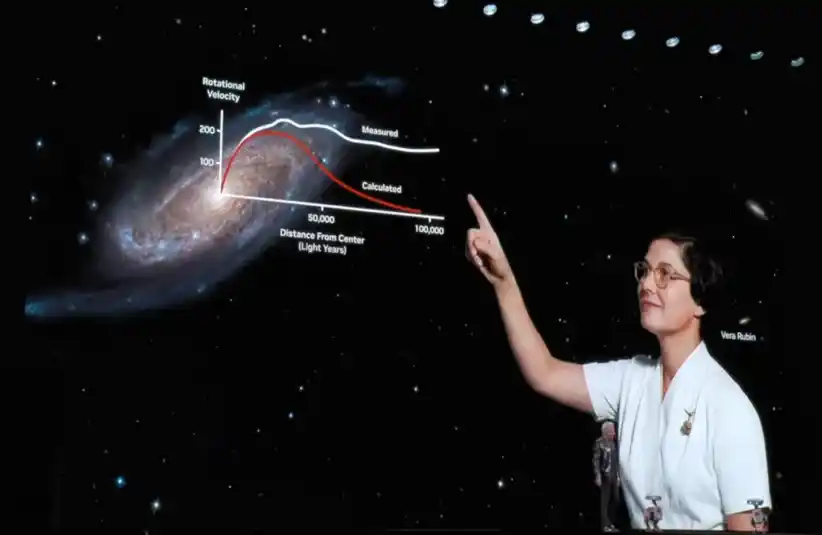
Nvidia framed Vera Rubin as the architecture built for the next era of AI, one defined by models that require far more memory, bandwidth and sustained compute than previous generations could deliver. Huang said Rubin was engineered to handle the rising complexity of multimodal and long‑context systems, which now dominate the industry’s research and commercial development.
During the keynote, Nvidia showcased new Rubin‑based systems designed for rack‑scale deployment. The company emphasized that Rubin is not a single chip but a coordinated platform that integrates compute, networking and memory into a unified system optimized for the demands of modern AI. The company said the architecture will serve as the backbone for what it calls AI factories, data centers built to operate continuously as they train and deploy large‑scale models.
The presentation also included updates on Nvidia’s work in autonomous vehicles. The company introduced new reasoning models developed to improve decision‑making in complex driving environments, reflecting its broader push to expand AI capabilities beyond text and image generation into real‑time physical systems. Nvidia said these models are designed to interpret real‑world scenarios with greater nuance and reliability, a requirement for next‑generation self‑driving platforms.
Huang told the audience that compute demand is rising at a pace that outstrips traditional hardware cycles, and Rubin is designed to meet that challenge directly. The company’s message was clear: the future of AI requires architectures built for scale, and Rubin is the system Nvidia expects to carry it through the next phase of growth.
Uncertain Future for GeForce Releases
The move leaves the future of GeForce releases uncertain and has already sparked debate across the industry. Nvidia has not said whether the pause is a brief reset or the start of a broader shift in how it approaches its consumer graphics business. For years, GeForce launches at CES helped set expectations for the gaming market, but this year’s silence suggests the company’s priorities are changing as its data‑center business grows far faster than gaming. With Vera Rubin entering production and cloud providers preparing to adopt the architecture later this year, Nvidia appears to be leaning into enterprise momentum rather than splitting focus between AI infrastructure and consumer hardware.
The shift mirrors a broader industry trend as companies race to build the systems needed to support increasingly complex AI models. Nvidia’s decision to spotlight Rubin at CES fits squarely into that transition, but the absence of new GPUs leaves open questions the company has yet to answer. Gamers and PC builders are watching to see whether Nvidia returns to its usual release cadence later in the year or whether GeForce will take a back seat as AI continues to reshape the company’s identity. As CES 2026 continues, the industry is waiting to see whether this moment marks a temporary pause or the start of a long‑term realignment that places AI at the center of Nvidia’s roadmap.