Mario Kart World Literally Takes Racing Series in a New Direction
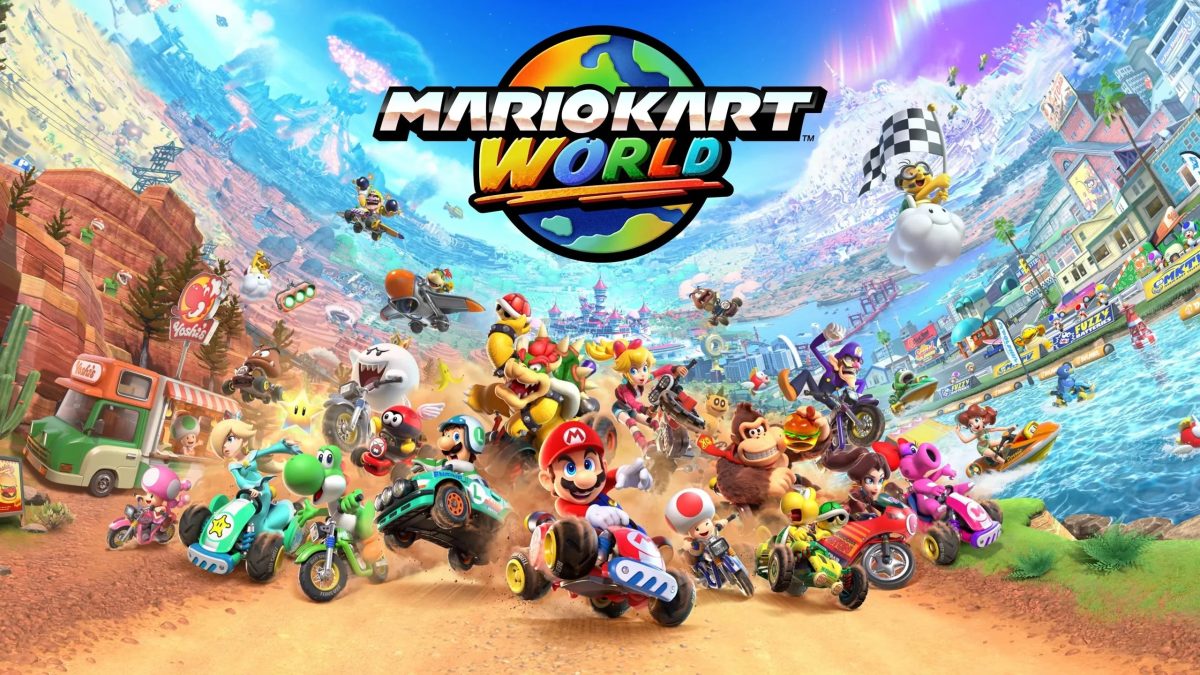
Nintendo initially had an exceptionally ambitious vision for Mario Kart World, serving as a follow-up to the best-selling entries on both the Switch and Wii U platforms. Consequently, two transformative changes were focused on in the original concept. The beloved racing game would double the number of racers and construct a vast, connected open world for exploration. For the developing team to turn their vision into reality, how did they make the game stand out from previous installments?
Mario Kart Embraces Open-World Concept
The development progress of Mario Kart World quickly encountered significant technical hurdles. Specifically, the original Switch hardware was an issue that caused the team to struggle early in implementing this expansive design effectively. Ultimately, they were forced to pivot because of this fundamental challenge, with this project becoming the flagship launch title for the more powerful Switch 2. Whether this hardware transition alone guarantees the team overcomes the immense scope of their vision remains to be seen.
Meanwhile, the developing team had to rethink the Mario Kart formula when creating the latest game’s core design. According to producer Kosuke Yabuki, the team had an early understanding that the concept represented a major shift in the series. However, the problem arose with how they addressed the issue, vastly underestimating the necessary personnel, time, and overall effort required to embrace the open-world concept. Notably, the title itself, Mario Kart World, directly manifested this cohesive gameplay.
The development team accomplished this task by replacing a traditional series of distinct racetracks with a singular, interconnected landmass where all courses link together through various routes. While Mario Kart World doesn’t utilize an established version of the Mushroom Kingdom, it introduces a completely new location meticulously designed from the ground up specifically for racing. Ultimately, the developing team taking this approach lets this foundational shift define the entire experience.
New Racing Tracks With Nostalgic Touch

For players traversing Mario Kart World‘s new environment, producer Kosuke Yabuki clarified that they’ll recognize iconic Mushroom Kingdom elements like question mark blocks or warp pipes. Moreover, they’ll see that the entire landmass exists solely for this specific game. Furthermore, the developing team worked meticulously, designing every geographical feature, including mountain heights and desert expanses.
Overall, these new locations specifically offer fans of the series a true racing experience within Mario Kart World. By taking this approach, the game diverges from typical open-world design philosophies, deliberately avoiding the attempt to create a realistic or believable location. Given this singular focus on enhancing the core racing gameplay, does the team ultimately create a more compelling environment than a traditional open world?
Yabuki’s experience directing Mario Kart 7 and 8 and producing ARMS makes him the perfect person to bring the latest installment’s open-world element to life. He emphasized that the development team consciously avoided replicating real-world patterns for towns or islands. Instead, they maximized the fun inherent in the Mario Kart formula through their designs. As a result, the game’s world functions exclusively as a dynamic racetrack, while its structure and landmarks prioritize high-speed competition rather than exploration or realism.
Mario Kart World Revitalizes Racing Series
Mario Kart World’s increased scale wasn’t the only challenge the developing team faced when constructing its connected environment. Specifically, altering any single element, such as a mountain’s height, created cascading effects requiring adjustments across the surrounding landscape. In particular, the game’s design impacted its effectiveness as a navigational landmark. Consequently, meticulous coordination was essential in building the terrain design, as changing even one feature inevitably meant modifying numerous interconnected aspects.
Due to the game’s complex interdependence, is its world-building significantly more demanding than isolated tracks? The philosophy of race track design seen within Mario Kart World was directly reshaped thanks to this fundamental connectivity. While previous games had developers control player viewpoints through predefined roads and paths, the latest installment grants racers freedom to approach or depart any course from multiple directions. This new approach in designing courses for this open-world structure required substantially more effort than in past titles, transforming the exploration and the core racing experience itself.