From Final Fantasy to Dragon Quest: Square Enix’s 5 Most Influential Titles
Square Enix is one of the largest developers in the gaming space today, especially in the RPG landscape. While the gaming giant has gone through many changes and consolidations or mergers over the years, one thing has stayed consistent: the studio produces games that have a profound impact on the gaming landscape. Not every game or every series is influential, but there is no denying that they have a catalog filled with games that shape the industry moving forward. From massive franchises like Final Fantasy and Dragon Quest, to single entries or small series like Nier and Octopath Traveler, Squeenix has managed to alter the future of gaming.
Square Enix Has Flaws, But Also Major Accomplishments
It has become trendy to criticize Square Enix as a company, both for their approach to games they release, as well as the delays, firings, and cutbacks. Oftentimes, this criticism is deserved; their games do not always listen to what fans want, and their development cycle often takes years, and still release with major problems (see Final Fantasy XV). None of that takes away from the fact that the company is a giant in the industry and has released impactful games time and time again. While they are known for their JRPGs, Square has entered multiple different spaces and genres and has had success doing so.
Given the long catalog of games that Square Enix has either developed or produced, it is hard to highlight the most influential. Nevertheless, these five seem to have impacted the gaming industry in different, but powerful, ways.
5. Octopath Traveler

Octopath Traveler is one of the most successful turn-based RPGs available right now, so it should be no surprise that it earned a mobile spinoff and a sequel, with room for far more. Being successful does not define influential, though. While its turn-based combat was well designed, and its multiple protagonists with diverging paths were exciting, neither feature was a new concept. What was influential, however, was its gorgeous HD 2D art style. This has been duplicated repeatedly, not just by Square Enix in future games, but also for other developers looking to find a modern approach to a retro style.
4. Dragon Quest
Dragon Quest only recently blew up in the West, most notably through Dragon Quest XI. However, in the east, especially Japan, Dragon Quest was one of Square Enix’s first, and arguably biggest, successes. Dragon Quest was so influential because it essentially proved the RPG genre as viable in the video game industry. Not only were the first games clever and approachable in their simplicity, but the original is what convinced the company to allow Final Fantasy to be produced and brought to the Western markets. Had Dragon Quest failed, it’s unclear what RPGs, or even Squeenix, would look like today.
3. Chrono Trigger
Chrono Trigger is often considered one of the best JRPGs of all time. While the ATB combat system was fantastic, and the gameplay as a whole was a masterpiece, neither was what sets this game apart as one of the most influential of all time. Instead, it was the non-linear storyline that offered several different paths and multiple endings. Essentially, Square Enix used the concept of time travel to weave multiple timelines together in an extraordinary way. It was this feature that has gone on to inspire countless other games since, including the very Octopath Traveler that shows up earlier in the list.
2. Romancing SaGa
Square Enix is most known for their JRPG franchises Final Fantasy and Dragon Quest, but they have several other lesser-known, longstanding series as well, and one of these is SaGa. First released in 1992, Romancing SaGa introduced a feature that had really not been highlighted, or at least named, previously. The non-linear gameplay was designed through the “Free-Scenario System.”
As explained by GameRant, “allowed players to choose from multiple protagonists, each with their own arc and branching storylines. It was one of the first times in an RPG that a player’s decisions could truly shape the narrative they experienced, allowing for untold replayability.” Players may take this concept for granted today, but Romancing SaGa can be credited for bringing the non-linear player choice model to the mainstream over three decades ago.
1. Final Fantasy VII

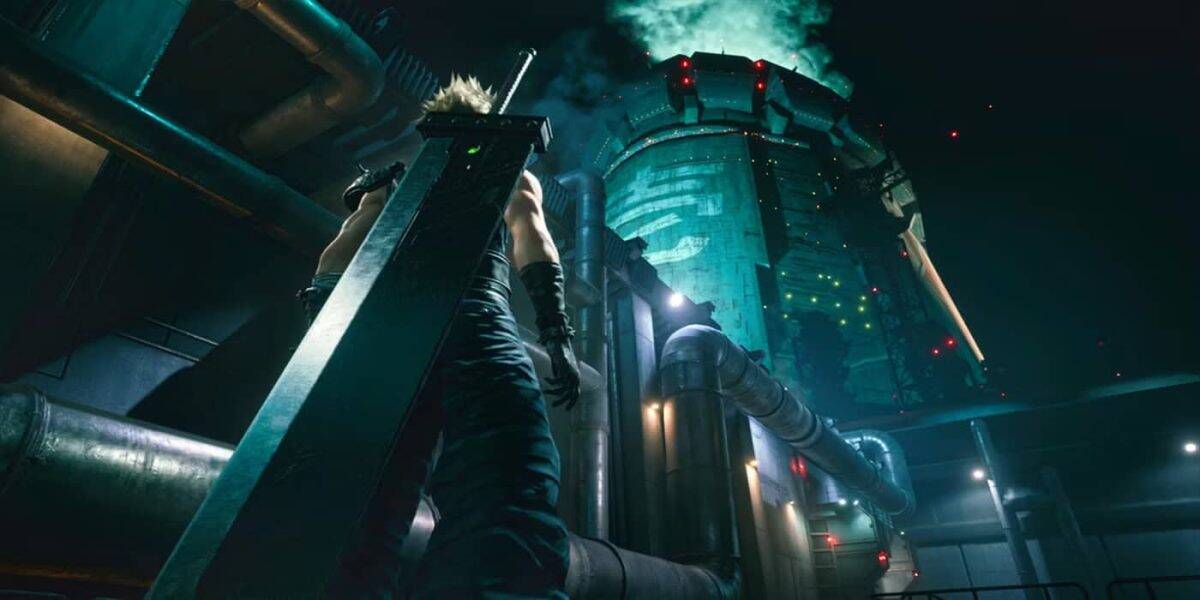
I openly admit that this placement is in part my own bias towards the game, but there is absolutely no question that Final Fantasy VII is not only Square Enix’s most popular and successful game, but arguably the most successful game in the entire JRPG genre. There is a reason it has seen movies, anime, books, multiple spinoffs, and an entire remake trilogy created off the original. Final Fantasy VII launched JRPGs into mass appeal in the west, bringing exciting and strategic gameplay, 3D art that was revolutionary in the day, and one of the most emotional moments in all of gaming history. The entry truly changed the gaming landscape like no other.
Final Thoughts
There is a barrage of other names that could have made it onto the list. Nier: Automata changed how the industry looked at narrative and action RPG gameplay. Kingdom Hearts was one of the original pioneers of gaming crossovers, something that is second nature today. Life is Strange helped define the narrative-driven gaming genre. Just Cause 2 revolutionized sandbox and open-world gaming through chaos and enjoyment. Final Fantasy XIV shaped not only the MMO landscape, but also a studio’s ability to reset and still be successful.
The list could continue on, but the point remains: Square Enix is an incredibly influential developer, one that should be recognized for bringing innovation that other studios have modeled their games after for years since.