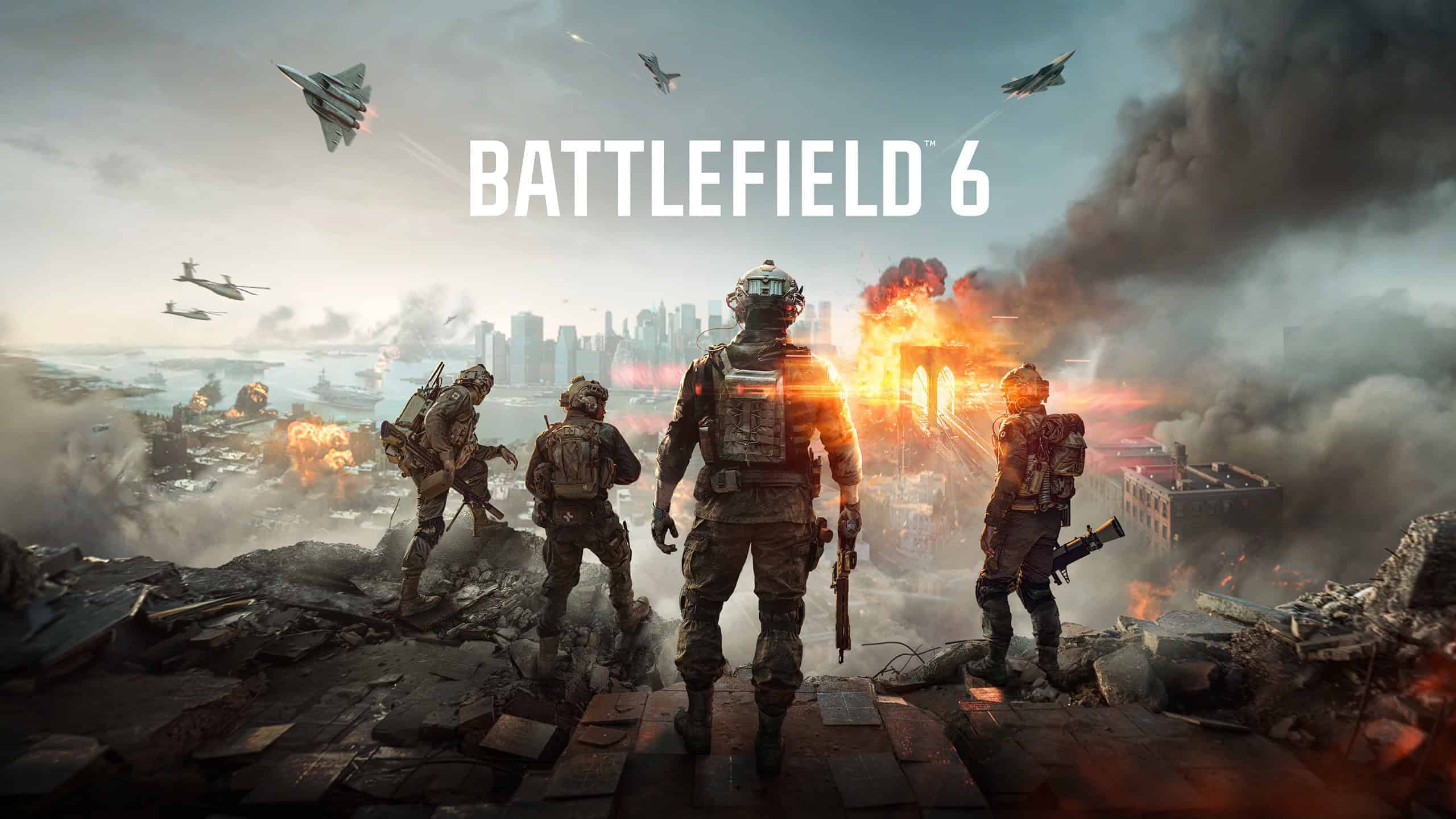
EA Insists Battlefield 6 Plot “Fiction,” Despite NATO Woes
Although the Battlefield 6 open beta recently launched for early access participants, the full game will officially be released on October 10th. With the beta version, however, these particular players will know some information regarding the campaign’s premise. With current global tensions, the narrative setup, involving NATO’s weakening and a major conflict, has taken center stage. Given the discourse surrounding politics in video games, does this seemingly relevant plot intentionally mirror real-world political instability?
Battlefield 6: Where Geopolitics Are Purely Decorative
Electronic Arts explicitly states that Battlefield 6‘s apparent resemblance to contemporary geopolitics is only to tell its story, not to spread a political message. Specifically, the core story depicts NATO faltering significantly as numerous European nations withdraw their support. As a result, the United States finds itself in a war all alone, nearly isolated against a massive private military force named Pax Armata, which aims to cripple the nation.
The existence of Pax Armata itself may be fictional, but NATO’s current cohesion and strength have demonstrably faced challenges compared to recent years. Furthermore, executive producer Christian Grass was recently questioned about the similarities between Battlefield 6‘s fiction and actual events. He explained that the development team required just two opposing factions to craft its story. While stressing the game was entirely fictional, Grass emphasized their goal was crafting a scenario that felt plausible and realistic to enhance the entertainment experience.
Devs Praise Enemy “Branding,” Ignore Real-World Mess
Developers throughout the gaming industry have a reputation for frequently disavowing political messaging, despite narrative content that appears to reflect real-world issues. For many studios, even acknowledging political or social commentary should be actively avoided within their games. Moreover, developers express reluctance to prevent controversy or alienate segments of their potential player base, with many taking explicit stances on topics their games might implicitly explore. This decision even extends when those connections seem evident to players. So, why do developers consistently maintain this position despite observable thematic elements?
Grass spoke more in depth regarding Pax Armata’s specific representation in Battlefield 6, characterizing the organization solely as an appealing and formidable antagonist. According to the executive, the faction lacks grounding in any real-world ideology or existing military faction. Additionally, Grass praised the developers for crafting a visually striking and engaging enemy faction. Specifically, he highlighted the group’s distinctive branding as a key element that helped the group stand out, making them feel compelling and memorable within the fictional context. Lastly, he emphasized that the team wanted to create a game that would excite players upon encountering these visuals in the game.
Spawn In As Pax Armata, Feel Relatable!
Ultimately, the unusual description for Pax Armata makes the story more relatable, as its fictional role involves attempting to destroy a nation. Some players may feel disconnected from this particular characterization due to being different from typical player experiences or values. Interestingly, the development team’s exceptionally cautious approach to antagonist design in Battlefield 6 may prove this specific word choice as an appropriate one. Ultimately, the team’s deliberately constructed character (a private military company motivated by abstract ideology rather than tangible financial incentives) sidesteps direct parallels to actual geopolitical or corporate entities.