
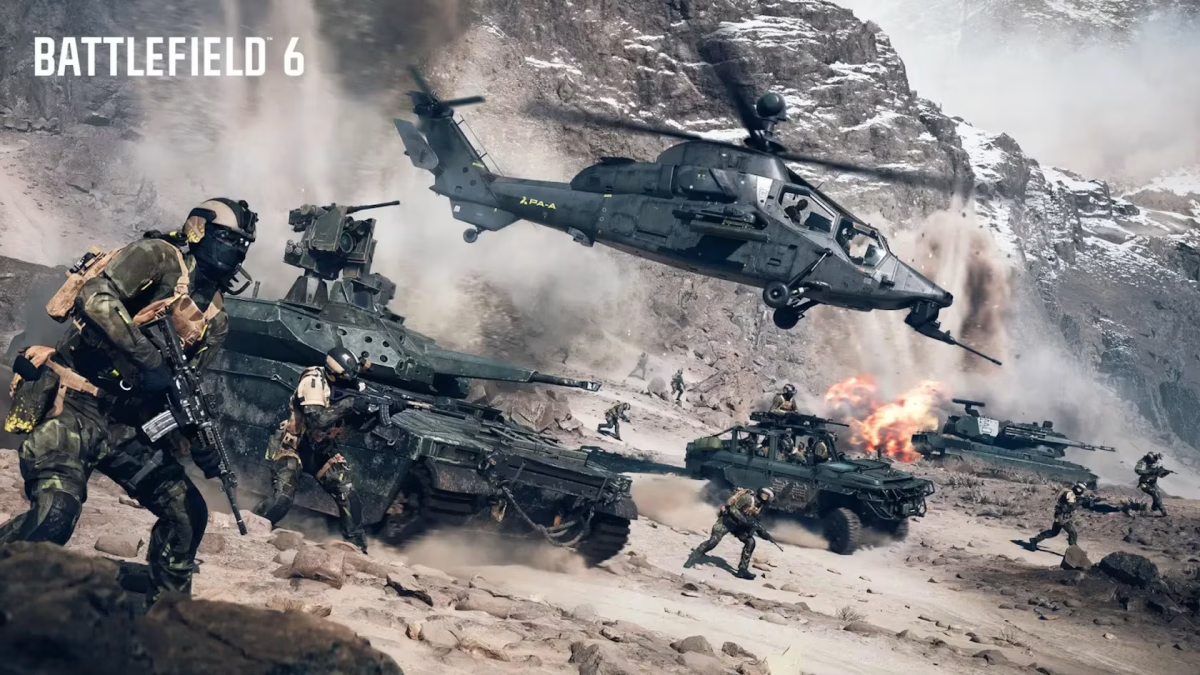
Battlefield 6 Technical Director: “We Learned a Lot from 2042”
The Battlefield franchise stands at a critical juncture. After the disappointing launch of Battlefield 2042, fans have been cautiously optimistic about the upcoming Battlefield 6. In a recent interview, Technical Director Christian Buhl opened up about how the team is applying hard-learned lessons from 2042’s troubled release to ensure Battlefield 6 delivers the stable, polished experience players deserve.
Buhl’s candid discussion reveals a development philosophy fundamentally changed by 2042’s reception. Rather than rushing to add flashy features, the team has prioritized the unglamorous but essential work of building a rock-solid foundation. This shift represents more than just technical improvements—it signals a renewed commitment to player trust and long-term franchise health.
The stakes couldn’t be higher for EA and DICE. Battlefield 6 needs to prove that one of gaming’s most beloved franchises can still deliver the large-scale warfare experiences that made it legendary. The lessons learned from 2042’s missteps are now guiding every technical decision.
Learning from Battlefield 2042’s Challenges
Battlefield 2042’s launch problems weren’t just bugs—they were systemic issues that revealed fundamental flaws in the development process. Buhl acknowledges this reality with refreshing honesty: “We learned a lot from 2042, which did not go great, right?”
The biggest lesson centered on timing and prevention rather than cure. Previous Battlefield titles often struggled with stability issues that teams would attempt to fix during crunch periods before launch. This reactive approach led to the technical disasters that plagued 2042’s early months.
“You can’t just fix everything at the end,” Buhl explains. “It’s something you have to maintain the whole time.” This philosophy has fundamentally changed how Battlefield 6 approaches development, with stability and performance considerations integrated from day one rather than treated as afterthoughts.
The team created “technical target levels”—specialized test environments packed with maximum expected content loads. These aren’t designed for fun gameplay but rather to stress-test the engine with realistic worst-case scenarios. If the game can handle these extreme conditions smoothly, normal gameplay should feel effortless.
Network infrastructure received particular attention after 2042’s server struggles. The new approach involves continuous simulation testing with millions of virtual players, identifying breaking points before real players ever connect. When systems fail during testing, the team fixes and optimizes until they can handle projected launch loads plus significant overhead.
How Battlefield 6 is Raising the Bar
The technical improvements in Battlefield 6 extend far beyond fixing 2042’s problems. Buhl and his team are implementing comprehensive testing regimens that dwarf previous efforts. Multiple studios run daily playtests, generating constant streams of performance data and crash reports.
Performance optimization has become a core development pillar rather than a late-stage consideration. The team built extensive test farms with various hardware configurations, from mid-spec machines to high-end rigs. This ensures consistent performance across the wide range of systems players actually use.
Platform-specific optimization demonstrates the team’s commitment to excellence everywhere Battlefield 6 appears. Xbox Series S optimization helps improve performance on budget PC configurations, while PlayStation 5 and Xbox Series X versions leverage unique console capabilities.
The PC version showcases this dedication with over 600 customization options. Rather than overwhelming players, simplified “Performance” and “Balanced” presets provide easy starting points while preserving deep customization for enthusiasts. This approach acknowledges that different players have different priorities and technical comfort levels.
Anti-cheat measures represent another major evolution. The controversial Secure Boot requirement sparked debate during the beta, but Buhl defends it as necessary for fairness. “We made a pretty deliberate decision that we wanted to focus way more heavily on fairness,” he explains, acknowledging the friction this creates while prioritizing long-term player experience.
Technical Innovation Beyond Stability
While stability takes priority, Battlefield 6 isn’t sacrificing innovation. The team made strategic decisions about which advanced features to include, notably choosing to skip ray tracing at launch to focus resources on core performance.
“We wanted to focus on performance,” Buhl states. “We wanted to make sure that all of our effort was focused on making the game as optimized as possible for the default settings and the default users.” This prioritization shows maturity in understanding what matters most to the majority of players.
Server architecture received comprehensive overhauls based on 2042’s networking lessons. Queue systems provide graceful degradation when player counts exceed expectations, maintaining good experiences for connected players rather than crashing systems. Launch preparations include capacity planning well beyond projected needs.
The development team’s testing methodology represents industry-leading practices. Continuous integration with performance monitoring means issues get caught and addressed immediately rather than accumulating into major problems. This proactive approach should prevent the kinds of systemic issues that plagued 2042.
What This Means for Battlefield Fans
For longtime Battlefield enthusiasts, Buhl’s interview offers genuine reasons for optimism. The technical director’s acknowledgment of past failures, combined with concrete actions taken to prevent repetition, suggests EA and DICE understand what went wrong and how to fix it.
The emphasis on fairness over convenience, while controversial, demonstrates a commitment to long-term player satisfaction. Anti-cheat friction may frustrate some users initially, but the payoff should be more enjoyable multiplayer experiences for everyone who meets the requirements.
Performance-first development philosophy addresses one of gaming’s most persistent frustrations. Players who remember Battlefield 4’s network problems or 2042’s technical issues should find Battlefield 6 refreshingly stable and responsive from day one.
The comprehensive testing approach shows lessons learned about modern game development realities. Today’s players expect games to work properly at launch, not months later, after extensive patches. Battlefield 6’s development process acknowledges and adapts to these raised expectations.
Building Trust Through Transparency
Buhl’s willingness to discuss 2042’s failures openly represents an important step in rebuilding player trust. Rather than deflecting blame or making excuses, he acknowledges problems and explains specific solutions being implemented.
This transparency extends to technical decisions that might seem controversial. The Secure Boot requirement explanation, while unlikely to satisfy all critics, at least provides reasoning behind the decision. Players can make informed choices about whether the trade-offs align with their priorities.
The focus on unglamorous but essential improvements—stability, performance, networking—shows a development team that understands what players actually need versus what marketing departments might prefer to highlight. This mature approach to feature prioritization suggests lessons learned about sustainable game development.
Battlefield 6 represents more than just another sequel—it’s a test of whether EA and DICE can rebuild one of gaming’s most important franchises. Based on Buhl’s insights, the technical foundation appears solid. Now the question becomes whether gameplay and content can match the ambition of the underlying systems.
The stakes remain enormous, but for the first time since 2042’s troubled launch, Battlefield fans have concrete reasons to believe the franchise might be heading in the right direction.