

Killing Floor 3 Review And What The Game Lacks
If you’ve been blasting Zed brains since Killing Floor 2’s heyday, you’re probably wondering if its sequel, Killing Floor 3, is worth your time and (potentially limited) hard drive space. Well, here’s the tea on Tripwire Interactive’s latest co-op shooter extravaganza, and honestly, it’s as much about the highs as it is the head-scratching lows.
Killing Floor 3 feels like a juiced-up, streamlined version of its predecessor—but not necessarily in the best way. It’s got firepower, it’s got gore, and it’s got slicker mechanics than a fresh pair of sneakers. But does it also feel like someone hit the “Early Access” button too soon? Absolutely. The game comes across as polished yet incomplete, leaving us hungry for more chaos… and more content. Here’s why.
First Impressions of the Carnage
From the get-go, Killing Floor 3 doesn’t mess around. It throws you into its signature Survival mode where you’ll face wave after wave of grotesque Zed mutations alongside friends (or solo, if you’re brave). It’s a bloody buffet of fast-paced action, the kind of stuff that’ll have you grinning like the Medic after a successful mid-battle syringe stab. The gameplay feels familiar but snappier, with quick dashes, mantling, and even powerslides that make movement buttery-smooth and satisfying.
Your arsenal? Oh boy, it’s a weapons catalog that’ll have Gun-Fu enthusiasts salivating. From the Ninja’s dual Katanas to the Firebug’s explosive Dragonbreath shotgun, every class has something fun (and deadly) to bring to the table. The problem? Once you’ve seen the limited selection of maps, Zeds, and weapons, it might start feeling like your playlist got stuck on repeat.
The Good, the Bad, and the Zeds
The Good: Combat remains the heart and soul of Killing Floor 3, and man, does it deliver. Each Zed kill packs enough visceral punch to make even DOOM slayer fans nod in approval. The new physics engine makes slicing, dicing, and blasting look weirdly… beautiful? Whether it’s the Scrake, now rocking cybernetic chainsaws, or the acid-spewing Bloats returning in all their chunky, stomach-churning glory, the variety in enemy designs keeps it entertaining. Even the environmental gore feels over-the-top in the best way, with blood flowing like it’s auditioning for a Tarantino flick.
The Bad: Unfortunately, its “streamlined” approach also means it skimps on content. At launch, we’re looking at just eight maps, six classes (or “Perks”), and about 30 weapons. For some, that limited scope might feel more like a starter pack than a meaty main course. A creative Survival mode keeps things amusing for a while, but eventually, you’ll hit the ceiling unless you’re okay with replaying maps with harder difficulty settings. And don’t even get me started on the bizarrely backward weapon progression system where starter weapons often outperform high-tier, expensive weapons. Huh?
Class Warfare Done Right (Mostly)
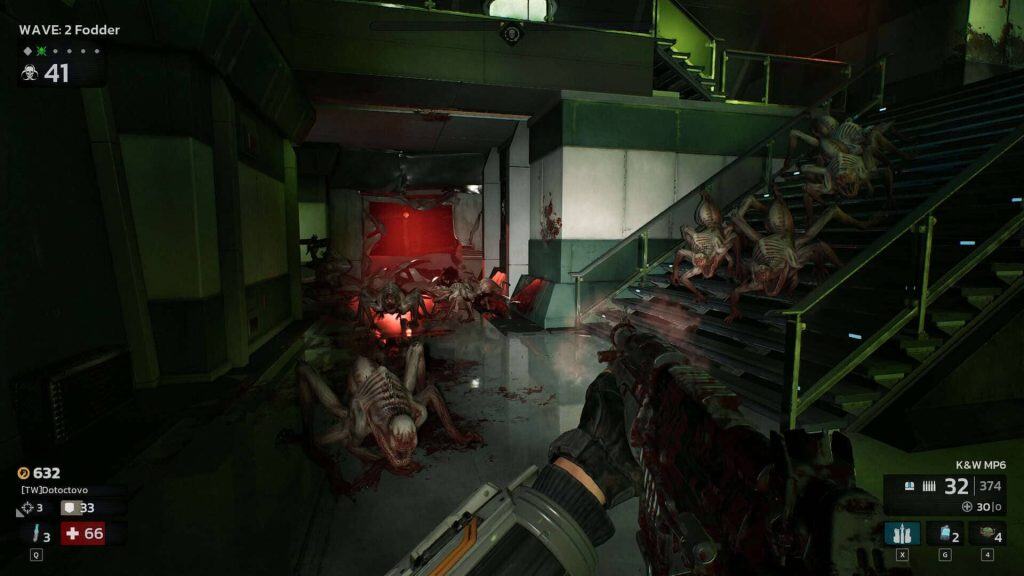
Killing Floor 3 divides the player base into six classes, each with its own personality and gameplay style. Wanna blow stuff up? Meet the Firebug, pyro master extraordinaire. Prefer close-quarters chaos? The Ninja’s your new bestie. Each class has unique perks, weapons, and tactical abilities that add some depth to the mayhem.
But here’s where things get spicy (and not in a good way): While class progression is more streamlined than Killing Floor 2, it’s shallow enough that veteran players might not feel the love. By the time you hit character Level 30, you’ll be itching for the kind of specialized skill trees and loadout customizations other modern games bring to the table. The result? A progression system that feels functional but uninspired.
Wait, That’s It?
If you expected Killing Floor 3 to bring a hearty helping of narrative flavor to its blood-soaked buffet, don’t hold your breath. Sure, you’ll find a Codex littered with lore bits and world-building tidbits, but the actual “story” (if we’re being generous) exists more as set dressing than something you’ll notice mid-match. Players salty about the lack of Objective Mode from Killing Floor 2 will be even less thrilled by the lack of innovation in side missions, apart from a few scavenger-hunt tasks tacked onto Survival mode.
The live-service elements sprinkled throughout—including micro transactions for cosmetics and a forgettable Season Pass menu—don’t exactly elevate the experience. They mostly exist as background noise for those who care about in-game aesthetics and loot. Want to change your armor skin? Knock yourself out. Want meaningful upgrades? Eh, maybe next patch.
What Killing Floor 3 Really Nails
Still, credit where credit is due. The art and environment teams deserve praise for creating maps that feel immersive (albeit not groundbreaking). From the misty forests of Radar Station to the multi-level chaos offered in R&D Lab, there’s plenty of tactical variety in positioning and defenses—even if the core objectives rarely change.
Plus, the hub area, dubbed the Stronghold, is a welcome addition that doubles as a playground for weapon tests, skill tweaks, and some casual downtime. It adds a semblance of immersion, even if it doesn’t cure the overall diet-size content problem.
Final Verdict
Killing Floor 3 won’t win any medals for reinventing the wheel, but it’s still one hell of a bloody good time (while it lasts). Its co-op combat hits hard, the Zed roster is grotesquely delightful, and the new gameplay refinements feel absolutely on point. But if you’re hoping for marathon-level replayability or surprises beyond its surface polish, you might want to temper your expectations.
With a stronger foundation and some post-launch TLC from Tripwire Interactive, Killing Floor 3 could grow into something truly special. For now, though, it’s like ordering a gourmet burger only to find out it doesn’t come with fries. Delicious, but you’re still left wanting more.
Want the latest updates or reviews like this one? Don’t forget to bookmark us (Total Apex Gaming)