No EOMM in Marvel Rivals, Role Queue ‘Won’t Work’ Says Dev
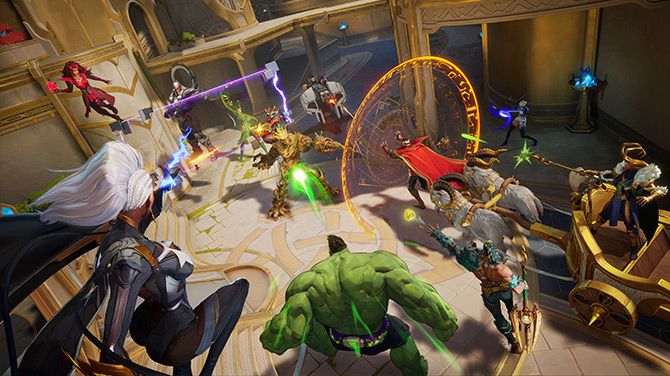
Matchmaking and ranked systems have been hot-button topics in Marvel Rivals, and the developers have finally responded in depth. In a recent video update, Zhiyong from the dev team broke down exactly how competitive scoring and matchmaking function behind the scenes—and what’s being done to improve the experience for everyone. One things clear, they stand by their statement that there is no EOMM in Marvel Rivals.
After every competitive match with no EOMM in Marvel Rivals,, a player’s score is calculated using two components: base points and performance points. These are weighted differently depending on your current rank, with lower ranks placing more emphasis on performance and higher ranks focusing more on match outcomes. For example, in a win where you earn 20 base points and 30 performance points, a Silver player might gain 26 total points (due to heavier performance weighting), while a Celestial player would only gain 23 (due to heavier base point weighting).
Base points are determined by whether you win or lose and by the difference between your team’s average competitive score and the enemy’s. Beat a stronger team, gain more points. Lose to a stronger team, lose fewer. The system adjusts for these skill disparities, rewarding players for punching above their weight and softening the blow when they lose to tougher opponents.
Performance points are more nuanced with no EOMM in Marvel Rivals,. Because heroes in Marvel Rivals play vastly different roles, the system normalizes stats by hero and match duration, calculating how well a player performed compared to others using the same hero at the same rank. If you play multiple heroes, your individual performances are weighted by time played. Then your personal performance score is compared to your teammates’ to determine how much you contributed relative to your team.
No EOMM in Marvel Rivals is More Complex

As for matchmaking with no EOMM in Marvel Rivals, it’s more complex than it may appear. The system factors in server selection, team size, competitive score, and waiting time. It starts by trying to match players as closely as possible by rank and team composition. But if wait times increase, the system expands the acceptable rank range to get players into games faster, which can sometimes lead to perceived imbalances.
Team compositions are also carefully managed—teams of six only face other teams of six, for instance. But high-rank players, especially those in full stacks, often experience longer wait times due to limited matching options. To address this, starting in Season 3.5, the devs are temporarily disabling teams of four or six from queueing at high ranks to reduce mismatches and queue delays.
A detailed example was given to demonstrate the balancing process. In a 3-2-1 vs 3-1-1-1 setup, the matchmaking system tries to balance overall team average rank and role distribution. However, synergy and main role selection can still lead to uneven experiences—like when one team has all six players on their mains while the other has to compromise.
A common concern raised by the community is the belief that Marvel Rivals uses EOMM—engagement-optimized matchmaking—to artificially maintain a 50% win rate. The devs were clear: Marvel Rivals does not use EOMM. Win/loss streaks, they explain, are statistically inevitable. Over ten games, the chance of three consecutive wins or losses is 50%, and in a game with millions of players, many will experience these streaks. Still, factors like role misalignment, repeated matchups, or poor matchmaking at off-peak hours can make streaks feel more frustrating than they mathematically are.
The question of a role queue also came up. The devs argue that while it could theoretically improve balance, it would significantly increase queue times and restrict player freedom. Instead, they aim to expand hero choices and strategic options across roles—especially vanguard and strategist—to give players more flexibility without locking them into rigid matchmaking lanes.
At the end of the no EOMM in Marvel Rivals update, the message was clear: the team is listening. They’re actively analyzing player feedback, adjusting systems, and working on long-term solutions to balance matchmaking quality with speed, all while keeping player freedom intact. The road to a better competitive experience in Marvel Rivals isn’t short—but it’s moving in the right direction.
And if you’re a super hero and comics fan, you need to read about the best Superman video games.