How Awe-Inspiring Clair Obscur: Expedition 33 Brilliantly Humanizes Its Dialogue
Ah, for the many ways that Clair Obscur: Expedition 33 is a masterpiece. Released on 25 April 2025, the game has taken the RPG world by storm with its unique and stunning art style, seamless turn-based gameplay, and, perhaps most importantly of all, its engaging dark fantasy storyline. It is a true triumph and testament to what can be achieved with a dream and a relatively small group of developers, and is, perhaps, even a statement about having smaller groups of writers to maintain a more focused narrative.
But how does Clair Obscur: Expedition 33 achieve such outstanding marks for storytelling? What makes it stand out from the other RPGs out there? The answer lies in the main communication method that the game has for plot progression, its dialogue.
The Importance of Talking
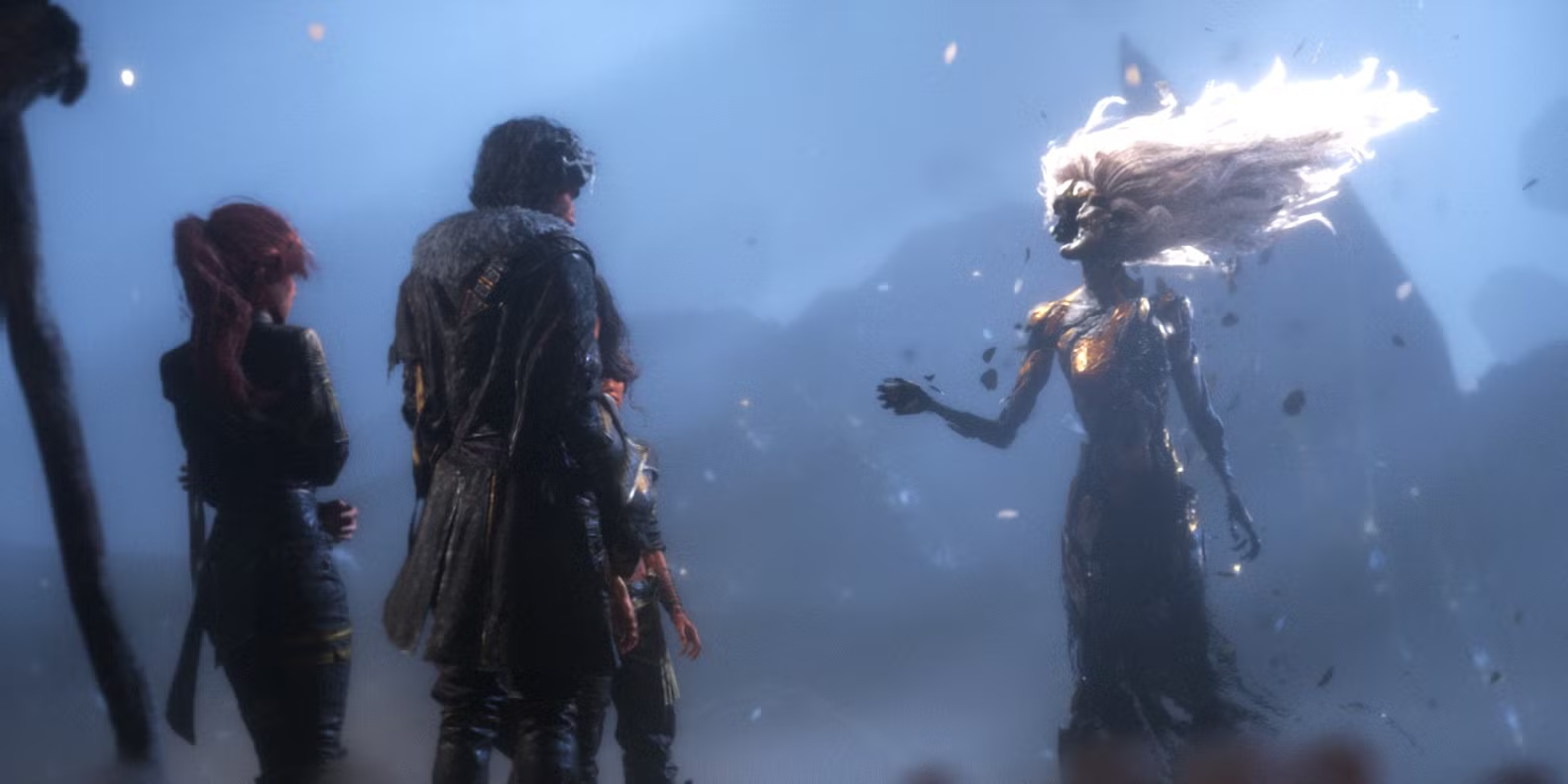
With a game like Clair Obscur: Expedition 33, most of the actual storytelling is going to be done through conversation, but unlike with movies or television, that dialogue is going to have to compete for the player’s attention with kinetic things like level exploration and battle gameplay. Clair Obscur: Expedition 33 understands this at its core and gives ample time to all these factors to create an immersive world with a progressive plot.
Of course, to do this, when the characters are given their time to interact, the dialogue must be tight. It must remind the player of what the character’s motivations and focuses are, it must show a continuous character growth or otherwise highlight flaws actively hindering that growth (yes, I’m looking at you Miss Maelle) and with such a small window to engage a moving audience, its easy to overload the player with dry dialogue that ultimately makes their main players feel wooden.
Clair Obscur: Expedition 33 achieves an insane balance there. Though each interaction provides something new about the characters or the plot for the player to obsess over as they continue ever onward, it never feels dry because the characters are so human. Little personality ticks are injected into even the most arbitrary encounters.
Natural speech patterns and diction are clearly taken into consideration within Clair Obscur: Expedition 33. as with Gustave and Lune, for example, after they first land on the shores of a new world. Lune is steady and forward-thinking, so her words are abrupt and her word choices are authoritative.
Contrastingly, Gustave is in despair after losing so many people in the first instance of their expedition, and so his words are stunted. As Lune and Gustave travel to the Indigo Tree in hopes of meeting more people, Gustave’s speech patterns start to change as he finds a rhythm with his grief. He becomes more verbose, commenting more on the world and the mechanics of his Lumina Converter, and that’s just on the sidelines of the explorative gameplay. The level of attention to detail in this game’s dialogue is, honestly, a true delight.
Those Telling NPC Interactions
‘I used to be an adventurer like you, but then I took an arrow to the knee.’ Does anyone else remember this iconic line from Bethesda’s Skyrim? It seemed as though the land of Tamriel was plagued by some sort of serial knee murderer intent on knocking all adventurers out of the running. Needless to say, Clair Obscur: Expedition 33 doesn’t skimp on its NPC dialogue or even expositional back stories. Every person you talk to on this journey has something to contribute, either to the philosophy of the world as a whole or to the emotional state of the character you’re playing, to create a truly living experience.
As you play through the prologue of Clair Obscur: Expedition 33 with Gustave or Sophie, you are able to interact with the various citizens of Lumiere, and one of the elements that is particularly titillating about this is how everybody knew each other. Everyone knew not only each other’s names, but their peculiarities, their family’s peculiarities, and even some controversial philosophies that proved they had interacted at various stages during their lives in meaningful ways beyond the game.
The people discuss the coming Gommage with you and will illuminate on their own fears or acceptances, like they’re talking to an old friend. Through this, the player is able to get a sense for who the people of Lumiere are, what sorts of pressures they experience due to the Paintress’s Gommage, and, of course, about the motivations of the characters they’re playing.
One particular interaction for you to look out for is the one between Eloise and Sophie during Clair Obscur: Expedition 33’s prologue. It doesn’t add too much enrichment to the plot overall, but it is a fascinating look into the mindset of Sophie, who is experiencing her last day. Eloise asks her why she didn’t join an expedition, and Sophie responds with: ‘I’m content with my life. Or…maybe I was afraid.’
The player is left wondering, as Sophie moves on, about Eloise’s indecision, a very human position to be in in this situation, as well as Sophie’s candidness when asked that question. Is Sophie only being so open because she has nothing to lose with her honesty on her last day? Or is she always so truthful? Provoking these kinds of internal questions makes her eventual deletion during the Gommage that much more heartbreaking. It also highlights that we will lose people on this journey that we have spent time building up in a way that parallels real life very starkly indeed.
Emotionally Heightened Moments
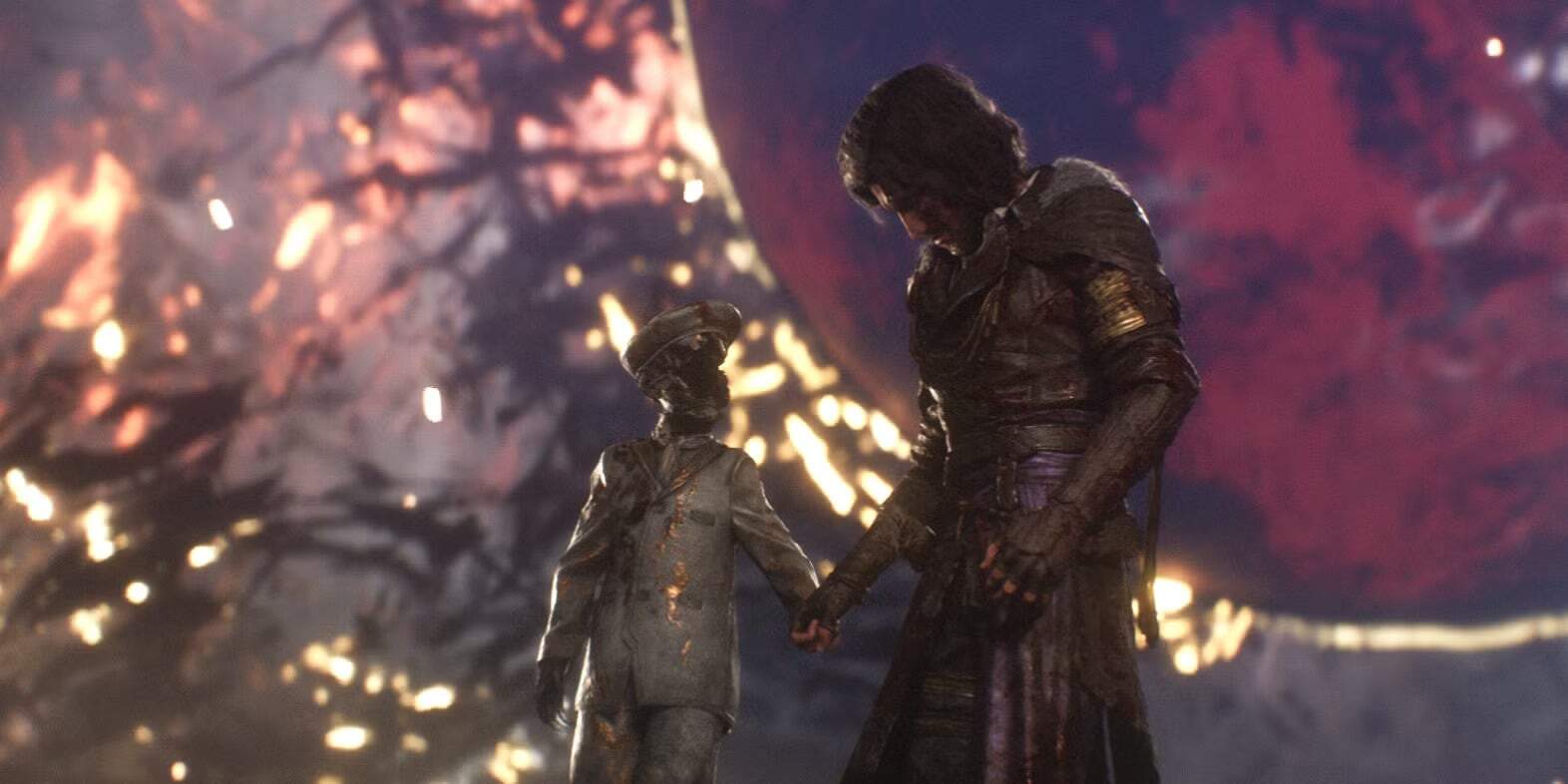
Clair Obscur: Expedition 33 dominates in the way it handles its day-to-day interactions, building up a gradually growing picture of the people of the Canvas, and as you might expect, it doesn’t disappoint in those climactic character-driven moments either. The genius of those big moments is in the way the characters are set up beforehand and in how the dialogue is so humanly flawed.
When Gustave holds Sophie as she begins to Gommage, despite the words in his eyes, all he can get out is: ‘I’m here’, and, similarly, though Sophie clearly wants to say more, all she can respond is: ‘I know, I know.’ Six words in total, though they pack such a heavy emotional punch because Sophie, in particular, has been painted as a wordsmith in her interactions with Cyril, and Gustave has been light-hearted and chatty with the children.
In the end, when Maelle speaks to Verso, each sentence is ripe with righteous anger or quietly philosophical articulation, and yet if you choose to play as Maelle and Verso is left to Gommage in her arms, he loses that articulation and repeats brokenly over and over: ‘I don’t want this life. I don’t want this life.’ The stark contrast between his composure and this breakdown drives home the tragedy of what’s happening to him and the futility of repeating these cycles because of Alicia’s continued refusal to deal with her brother’s passing.
Dialogue Done Right
Clair Obscur: Expedition 33 is a wonderful example of storytelling done right through the medium of gameplay. Each and every element of this game is used to enhance the overall experience of the story somehow, from the visual effects depicting floating furniture and areas where the ‘chroma has been affected’ to the various combat enhancements designed to help the characters survive in their flavorful world. Nothing quite carries the story the way the dialogue does, though, and Clair Obscur: Expedition 33 has nailed this as much as it’s nailed everything else.
The dialogue is engaging, relevant, and, most prominently, human. The players are encouraged to become invested in these circumstances, in this team, because of who they’re watching. The game gives ample opportunities to learn about these people and rewards its players with nuance and insight when they choose to engage. And just like the developers themselves, who chose to pioneer their way into this game in establishing Sandfall Interactive, Clair Obscur: Expedition 33 is not afraid of being beautifully flawed, of presenting tragically imperfect moments when it all gets real. It’s not so much a cinematic experience as it is a real experience.